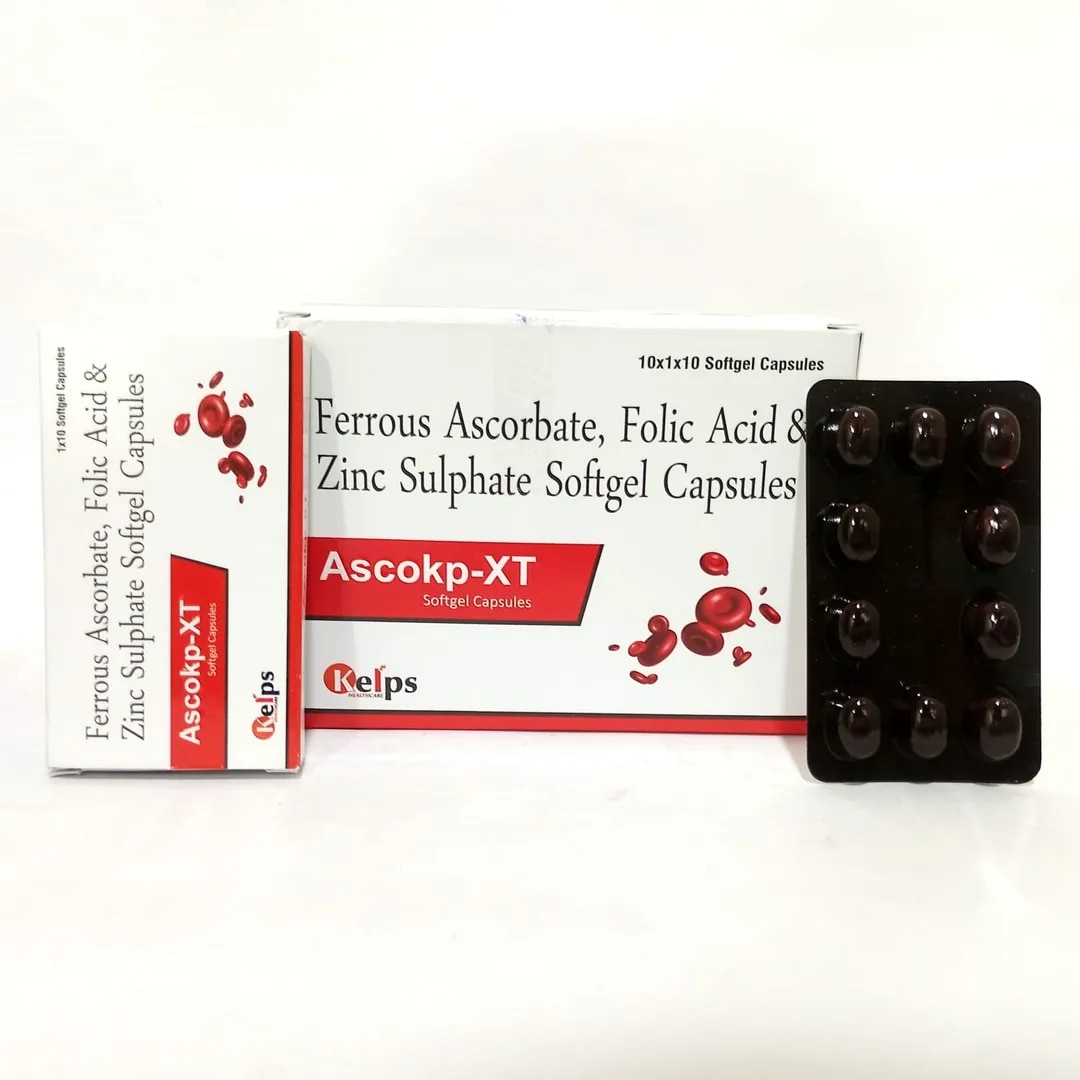
ASCOKP XT CAP
Description
Iron capsules are primarily indicated for the prevention and treatment of iron deficiency and resulting conditions, most commonly iron deficiency anemia.
. Iron Deficiency Anemia (IDA): This is the main indication for oral iron supplementation. Iron is a critical component of hemoglobin, which carries oxygen in the blood, and a deficiency leads to fatigue, weakness, pale skin, and shortness of breath.
. Nutritional Deficiency: For individuals whose dietary intake of iron is insufficient to meet the body's needs (such as those with an iron-poor diet or malabsorption conditions like celiac disease).
. Increased Iron Needs:
. Pregnancy: Increased blood volume and the needs of the growing fetus and placenta raise the risk of iron deficiency anemia during pregnancy.
. Heavy Menstrual Periods: Women with heavy monthly periods are at a higher risk of iron loss.
. Infants and Toddlers: Premature or low-birth-weight infants, or those not consuming iron-fortified foods or formula, often require supplementation.
. Frequent Blood Donors: Regular blood donation leads to iron loss that may require supplementation to replenish stores.
. Chronic Blood Loss: Conditions causing chronic internal bleeding, such as gastrointestinal bleeding from ulcers, inflammatory bowel . disease, or certain medications, can lead to a deficiency.
. Anemia of Chronic Disease: In some cases, such as in patients with chronic kidney disease, cancer, or heart failure, iron may be used . alongside other medications to manage anemia, although oral iron absorption might be less effective due to inflammation
. Restless Legs Syndrome (RLS): Iron supplementation may help decrease symptoms in individuals with RLS who also have low iron levels.